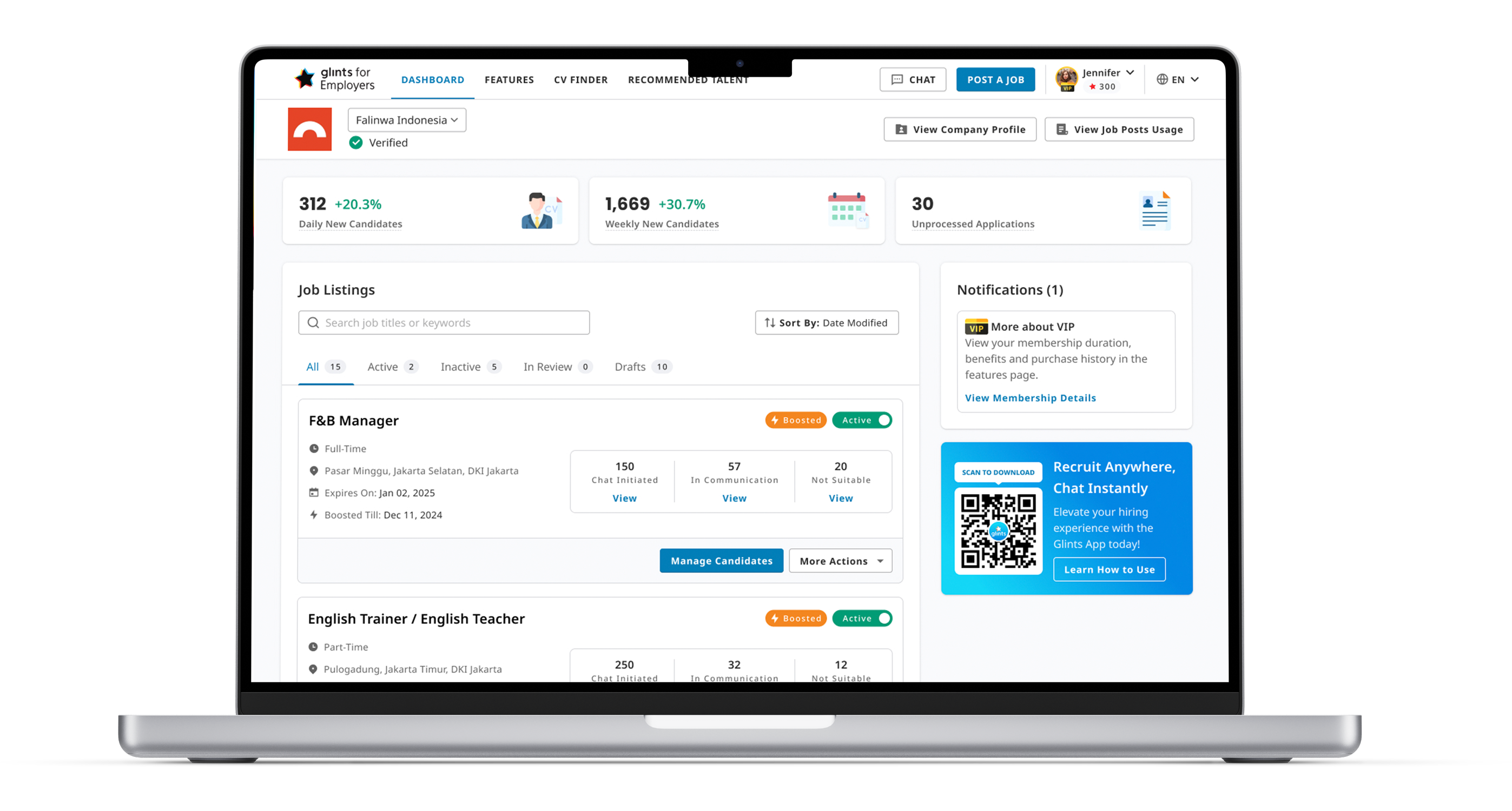
The Glints Employer’s Platform enables hiring teams to seamlessly post jobs, discover top talent, and source potential candidates all in one place.
In early 2023, Glints shifted its strategic focus toward revenue generation. However, the Employer Platform had long been underinvested in. Resulting in critical usability gaps, a lack of essential features, and an outdated, fragmented UI.
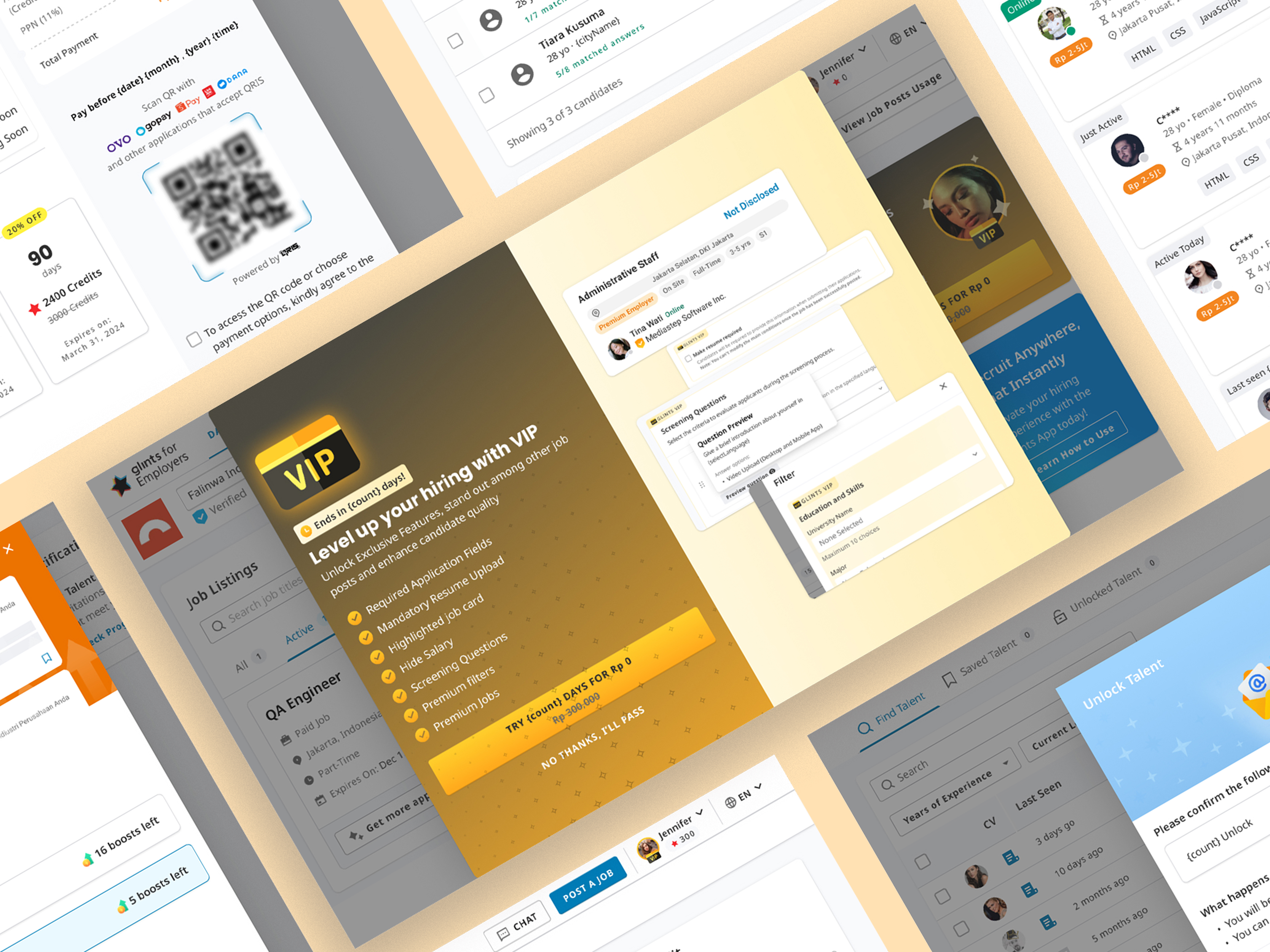
To support scalable growth, the platform needed a major overhaul: modernizing its legacy architecture, enabling self-serve monetization features, and improving the overall user experience for hiring teams.
How might we better support employers who are hiring quality talent on the platform?
Lead Designer
2 years
(2023 - 2025)
3 product managers
8 developers
2 QA engineers
Figma
JIRA
Useberry
Survicate
Amplitude
Led the visual style and design tone of the website, ensuring a cohesive user experience.
Conceptualized and designed new features, while optimizing existing ones to enhance user journeys.
Collaborated with PMs and developers to launch high-quality features under tight deadlines.
Conducted competitor analysis to inform design strategy.
Created and maintained a comprehensive UI kit and was in charge of UX copywriting.
Designed employer email templates for key touchpoints and account updates.
Designed the backend system to empower the internal team in managing accounts, quotas, and subscriptions.
Redesigned the legacy platform with a modern UI and optimized existing workflows to significantly improve usability and user experience.
Reached feature parity with key competitors in under a year through fast, iterative design.
Launched a self-serve revenue model, transforming the platform into a direct revenue driver.
Hit our North Star metric—1M employer–jobseeker connections—in just 6 months (vs 1-year target).
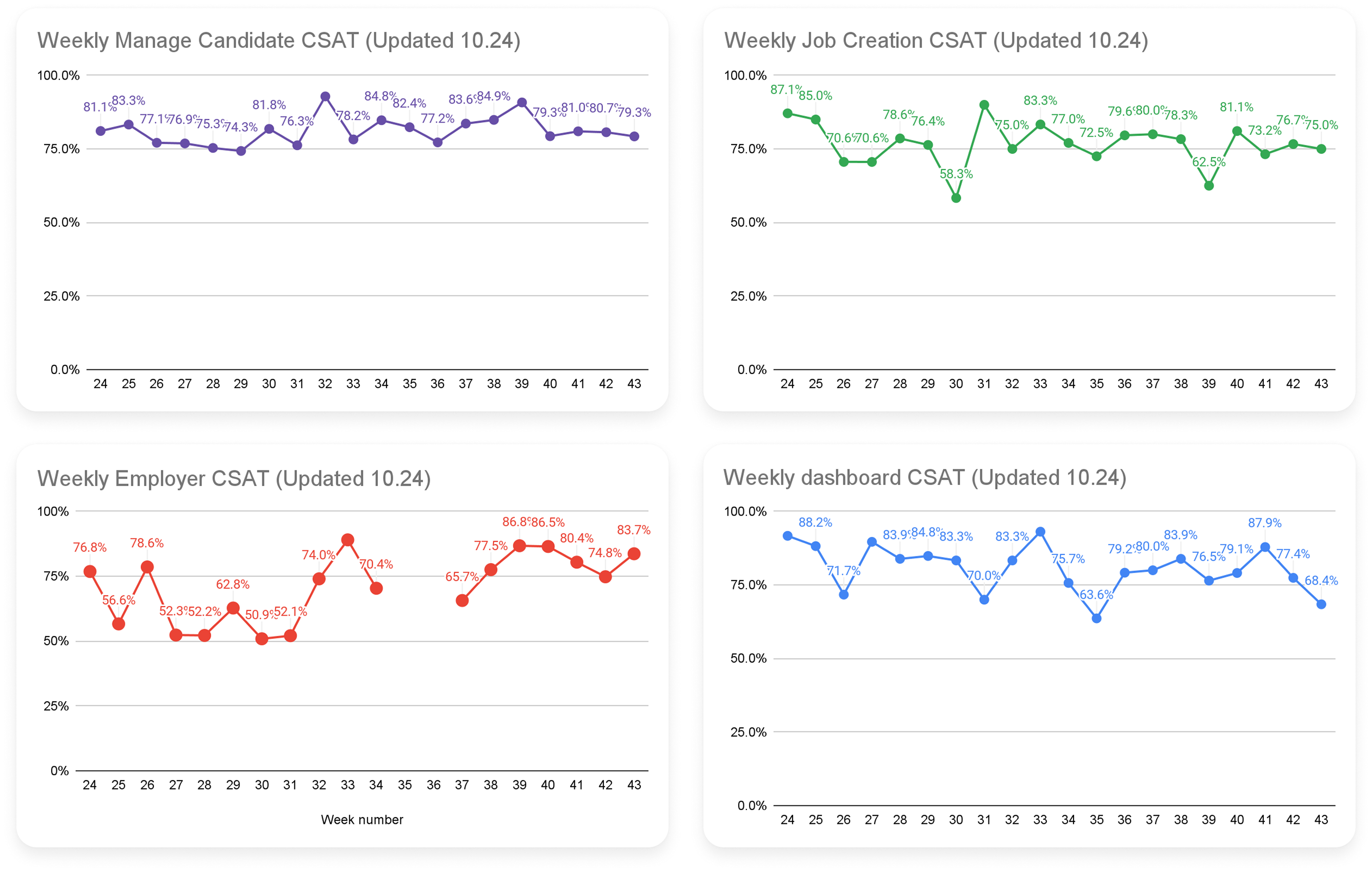
Before diving into the design phase, I prioritized understanding the current state of the employer platform by conducting thorough research.
Looking at the data, employer satisfaction with the core features of the platform was decreasing. This highlighted a critical issue that needed immediate attention to improve the overall user experience and ensure long-term engagement.
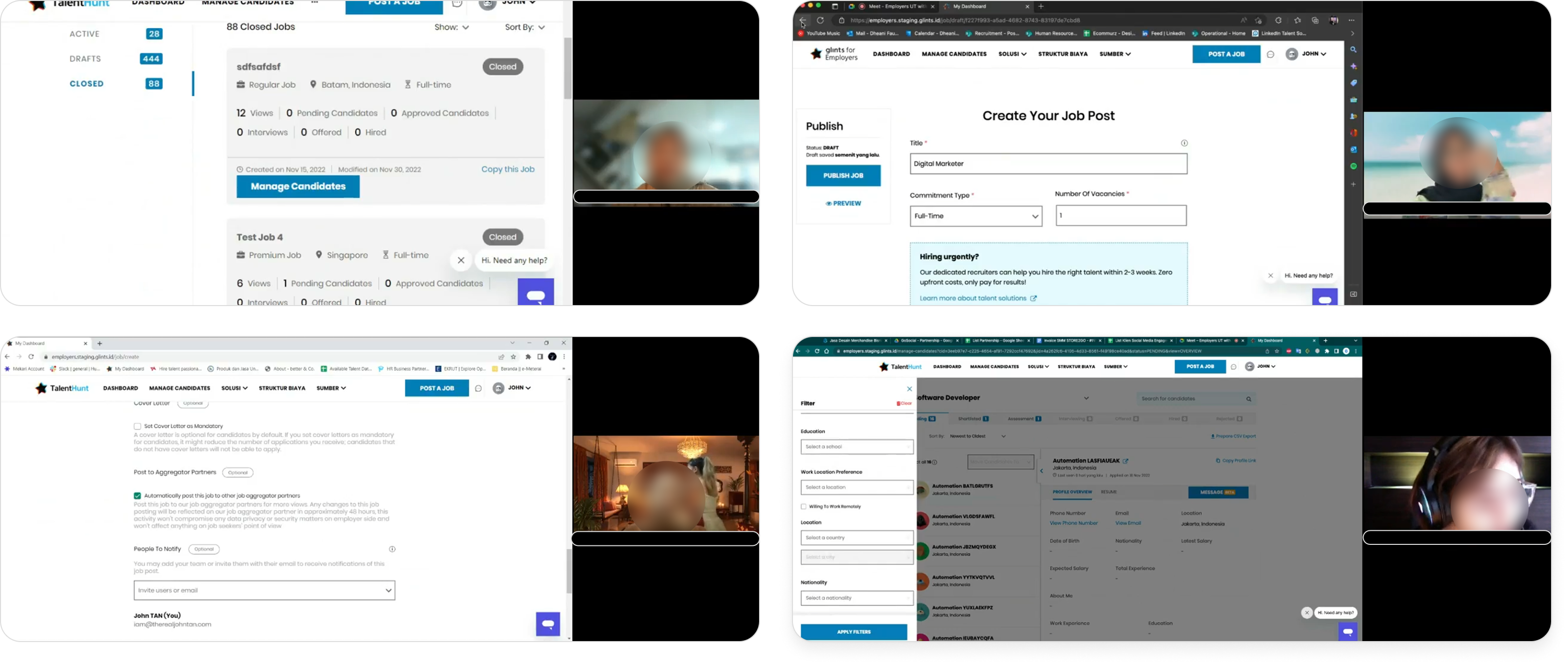
I aimed to validate assumptions, gather qualitative insights from employers, and evaluate feature usability to inform the redesign. This ensured our solutions would address pain points and enhance satisfaction.
I partnered with a researcher who conducted 60-minute moderated interviews with 12 deliberately selected participants across various industries and experience levels
I conducted competitive analysis of main competitors in the Indonesian job market and performed heuristic evaluations of each of their offerings, enabling us to adopt successful strategies and avoid pitfalls.
.png)
To build a user-centric product strategy, we mapped the user journey to identify opportunities and challenges. The research included semi-structured interviews and quantitative methods like Likert scales. We combined these insights into insights, covering employers' experiences during pre-service, service, and post-service stages.
Employers seek candidate previews for solution comparison.
Job marketplace: Variety and volume of job listings.
Consultancy: Client base and success stories.
A robust recruitment system encourages employers to strategize sourcing and use varied channels to target different types of candidates.
Employers seek comprehensive candidate data, including:
Resumes on the platform
Skills validated through pre-tests.
Social media and reference checks for background verification and identifying red flags.
Employers face issues with irrelevant applicants on job portals and recommendations from third-party consultants.
Multiple hiring steps still don’t enable accurate candidate assessments.
Employers from nascent-stage startups often struggle with basic hiring tasks, such as:
Researching job post templates online to write job descriptions.
Consulting experts to understand how to create employee contracts.
Employers’ satisfaction decreases when they have less control over the recruitment process.
After the interviews and user testing sessions, we developed user personas for the product, outlining user goals, needs, and frustrations.
This allowed us to understand the main jobs to be done by employers and to understand what features and usability aspects were important to focus on.
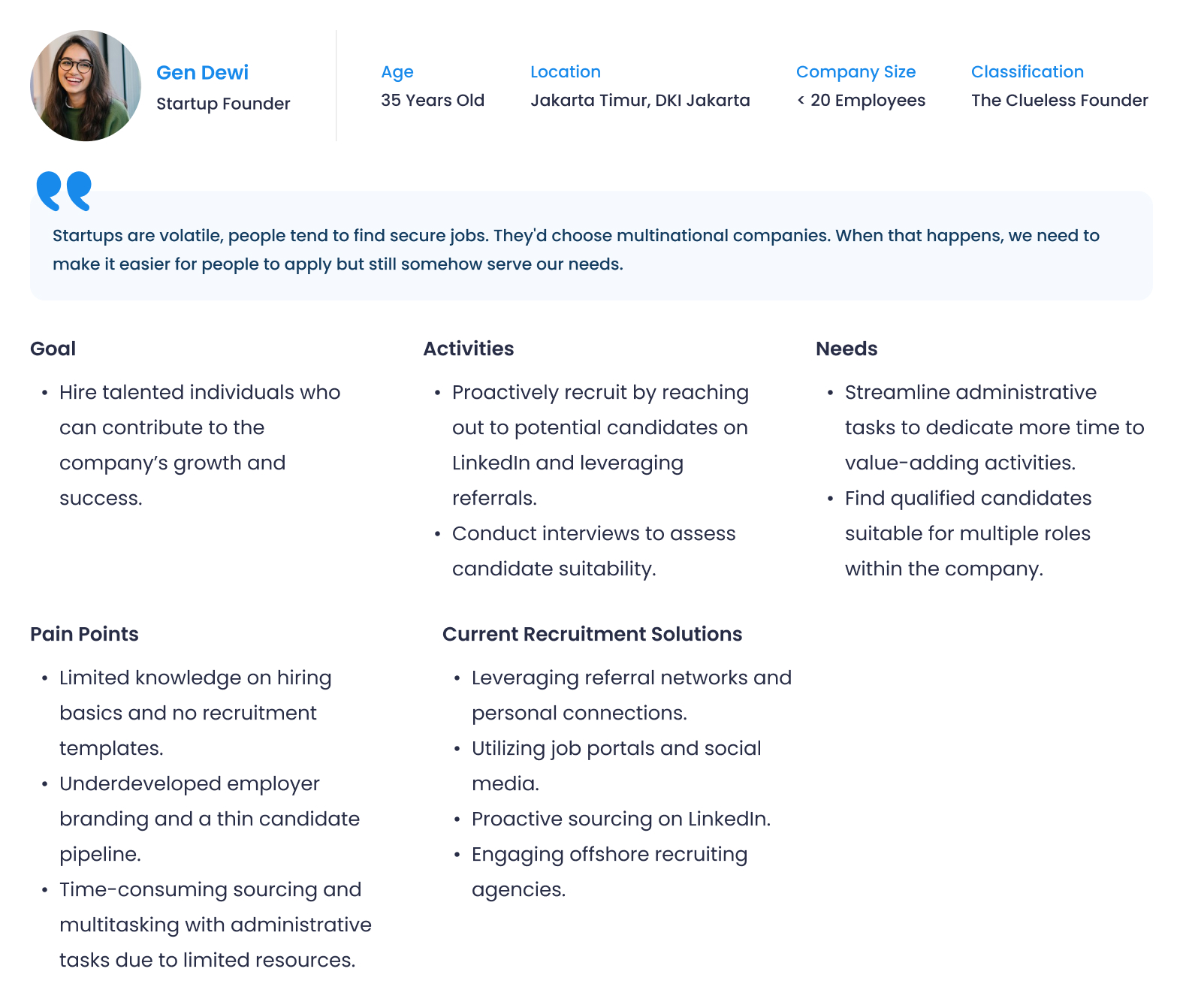
The Clueless Founder
Struggling to Hire with Limited Resources
Gen leads a small startup with big growth ambitions but lacks hiring expertise, tools, and branding. She needs simple, self-serve solutions to find versatile talent fast—without the overhead of complex processes.
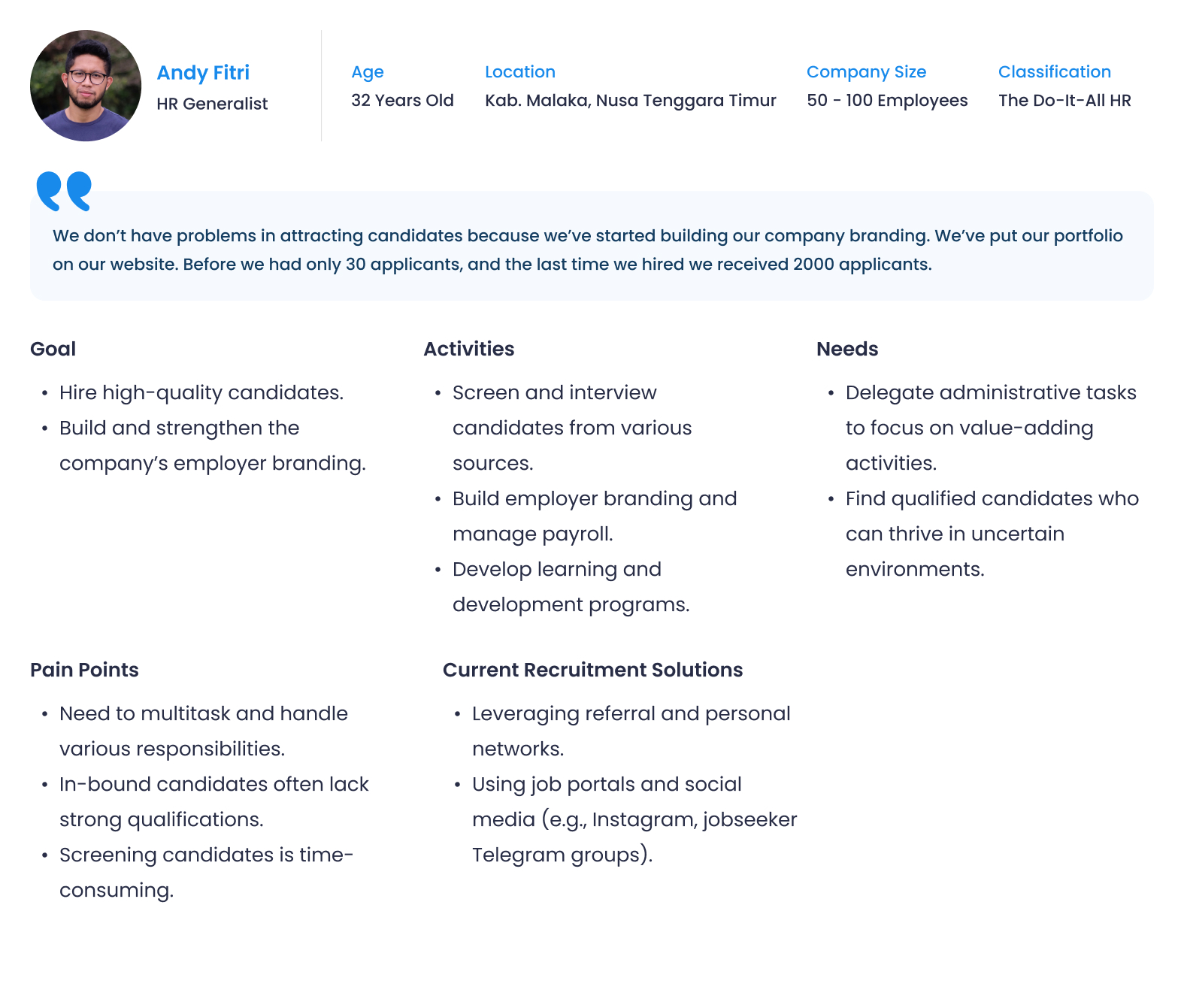
The Do-It-All HR
Balancing Admin Work with Strategic Hiring
As a multitasking HR generalist in a growing company, Andy needs tools that automate admin and help identify quality hires. Though candidate volume isn’t an issue, screening and selecting the right talent is a major challenge.
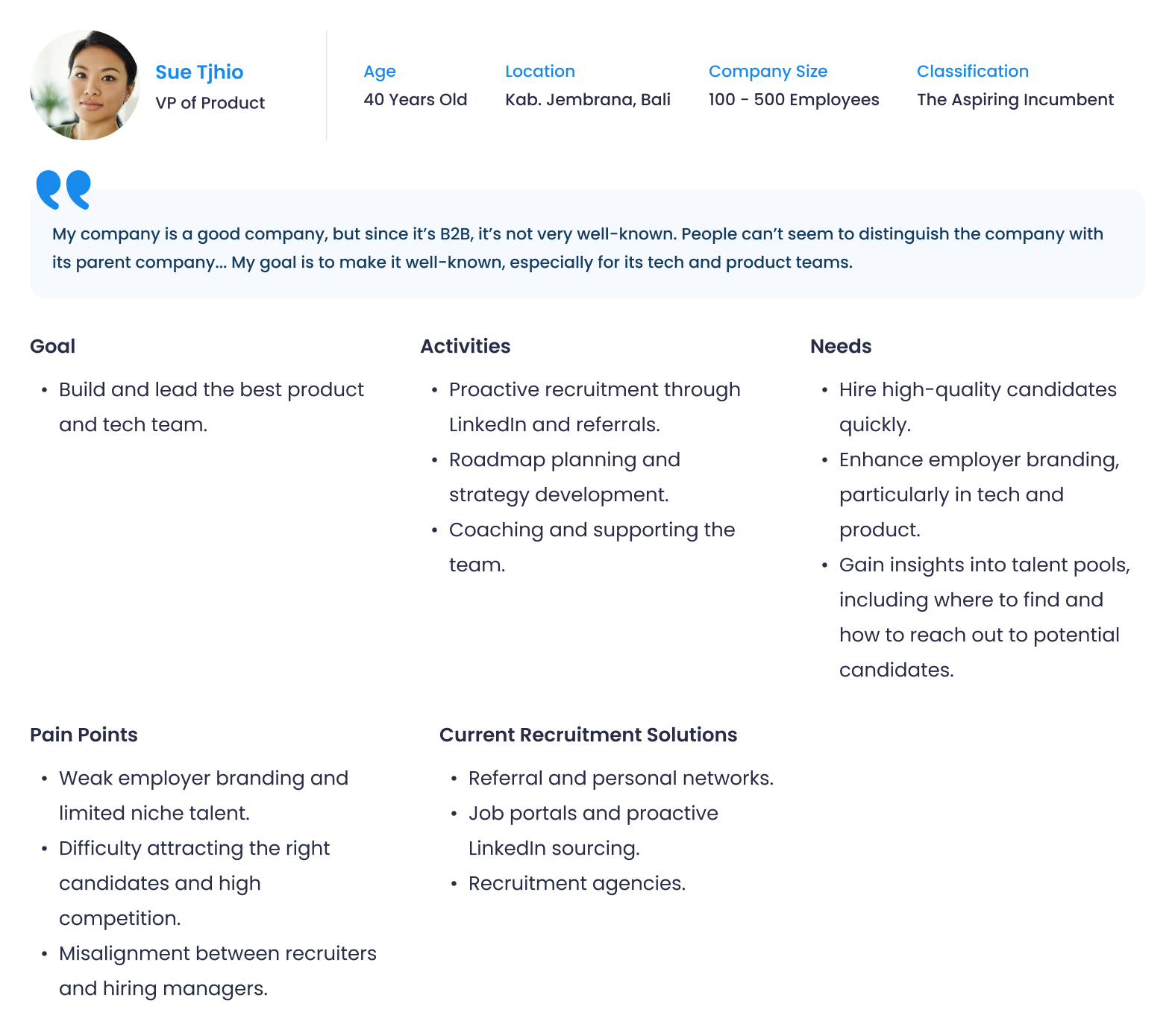
The Aspiring Incumbent
Scaling High-Quality Tech Talent with Stronger Branding
Sue is building elite tech teams in a mid-sized B2B company facing fierce competition. Her focus is on speeding up hiring, strengthening employer brand visibility, and gaining deeper insights into where to source niche candidates.
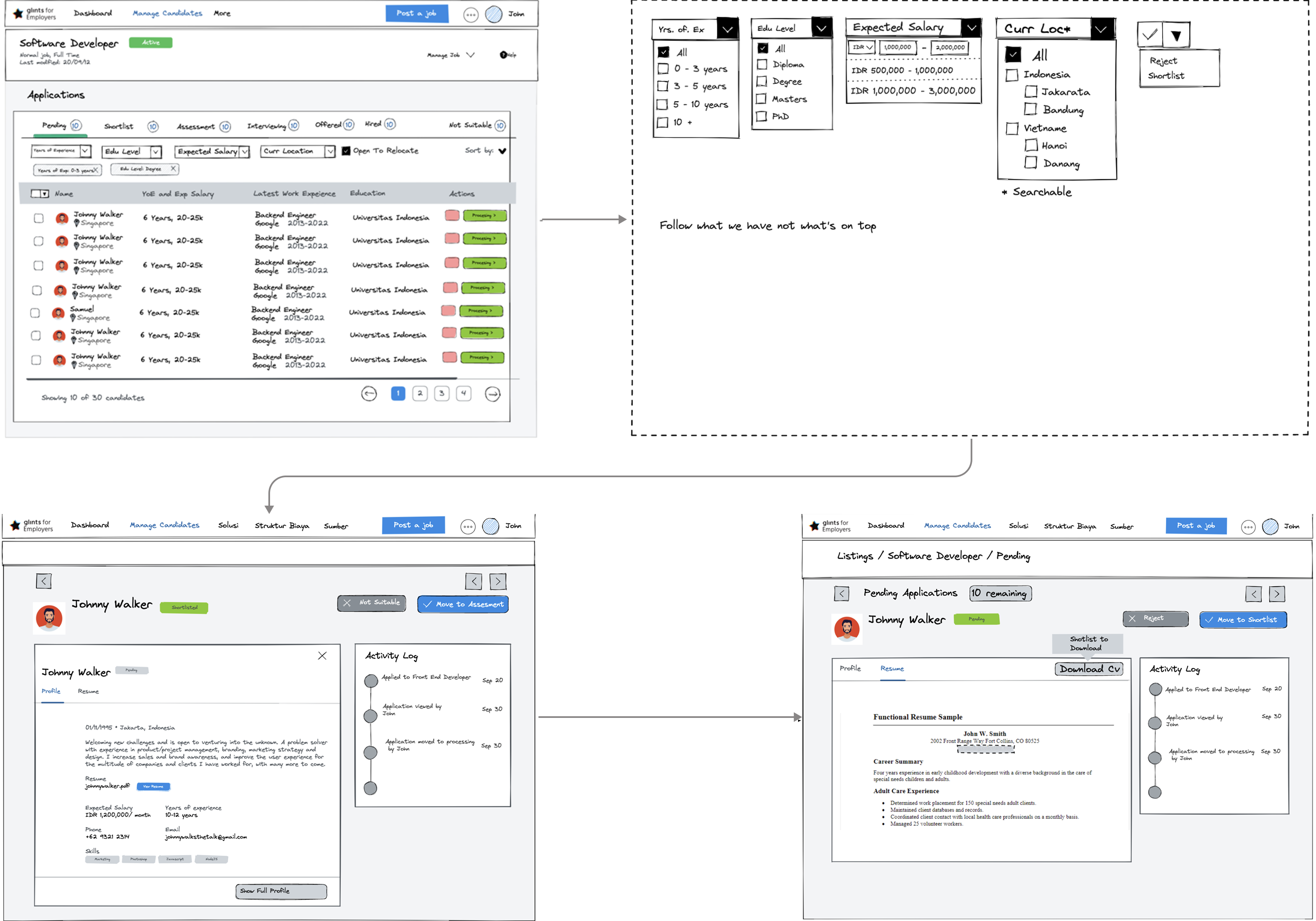
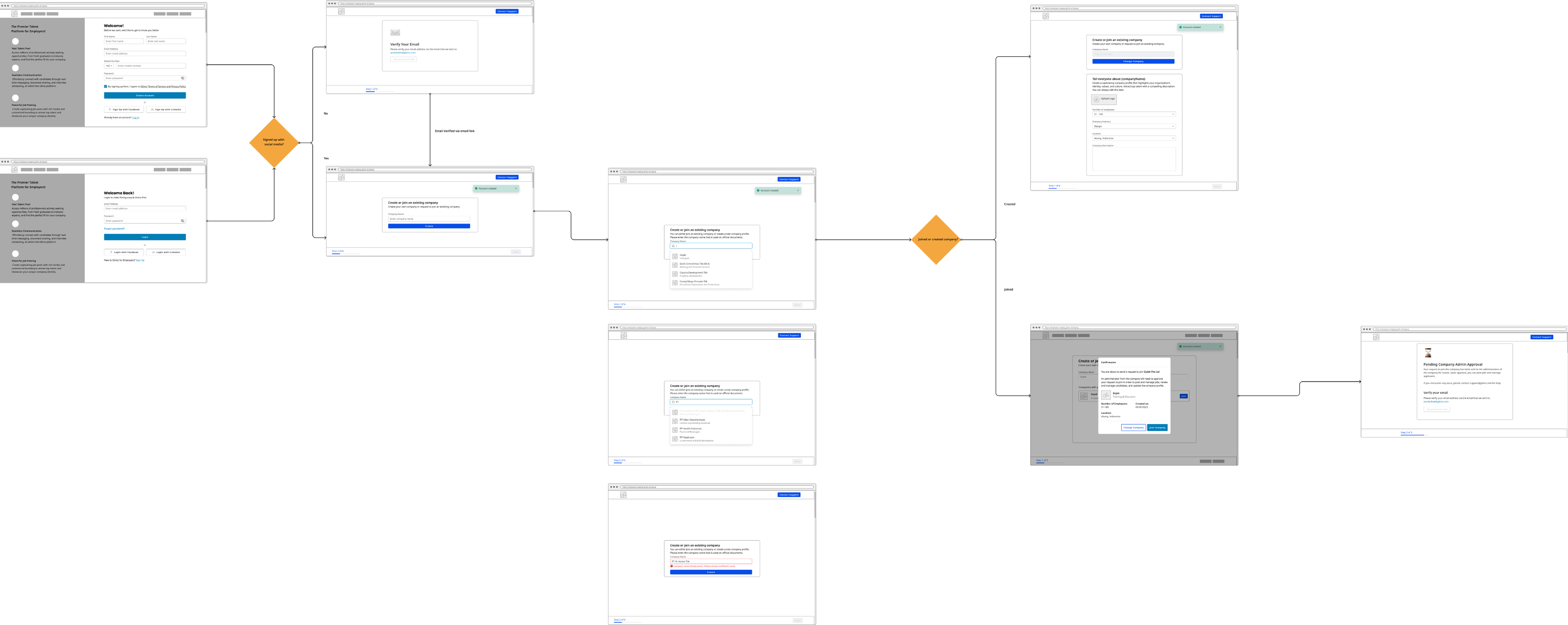
We started by reinforcing core features. I led heuristic reviews and competitive analysis to spot usability gaps and align with industry standards. Using existing metrics and past insights, I helped shape solutions that balanced user needs with business goals.
I also reviewed workflows end-to-end, simplifying key actions and making them more intuitive. Small, thoughtful enhancements added value without adding complexity.
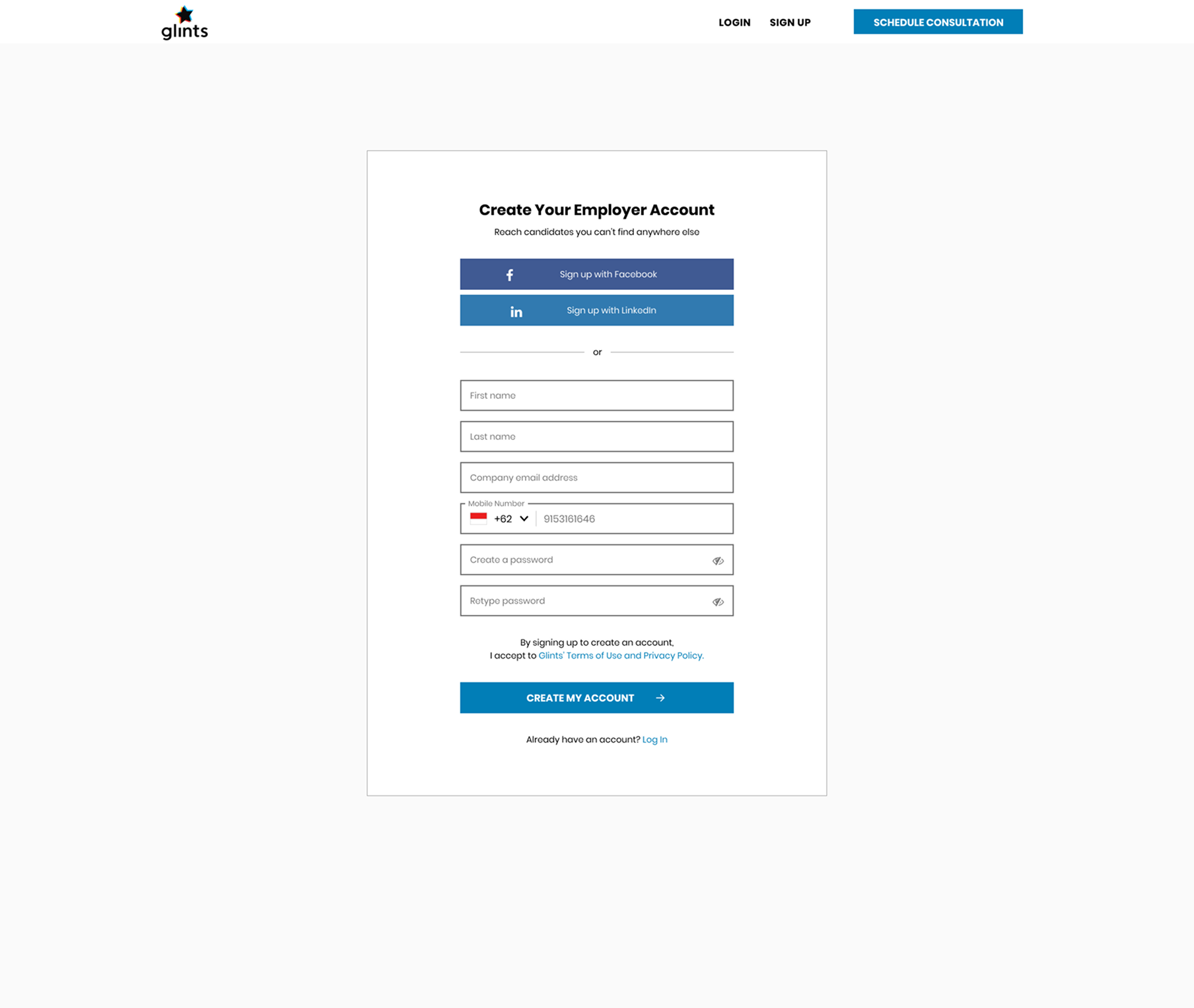
Reduced cognitive load via chunking of inputs
Progressive disclosure when creating companies
Integrated WhatsApp verification into sign up flow
Added enticing statisitics to increase pull factor
.png)
Introduced value added features like notifications and statistics
Reorganized information architecture to streamline information being shown.
Enhanced components and reduced visual clutter
Added easy entry points to main user actions
.png)
.png)
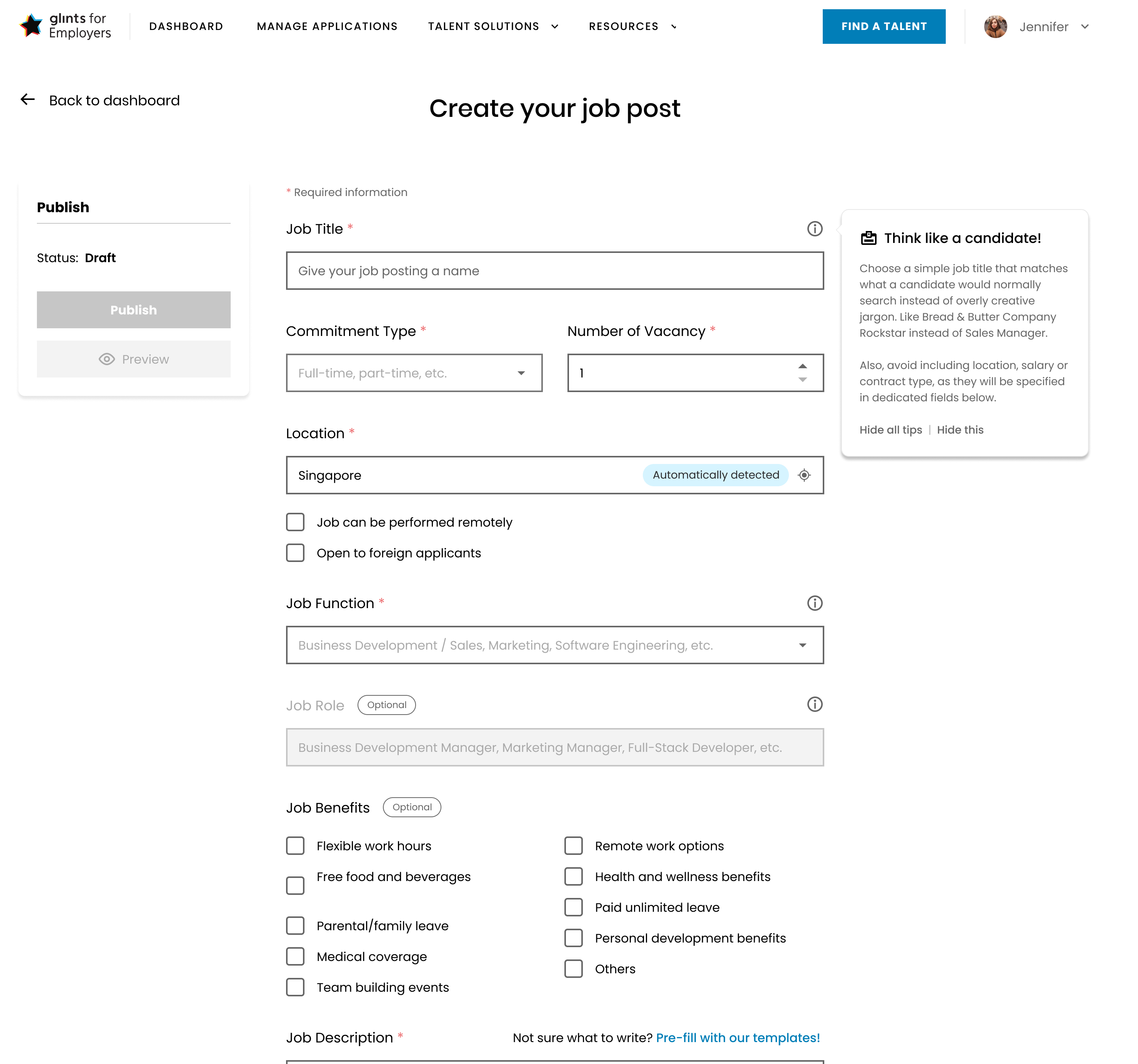
Reorganised information architecture
Progressive disclosure to reduce cognitive load
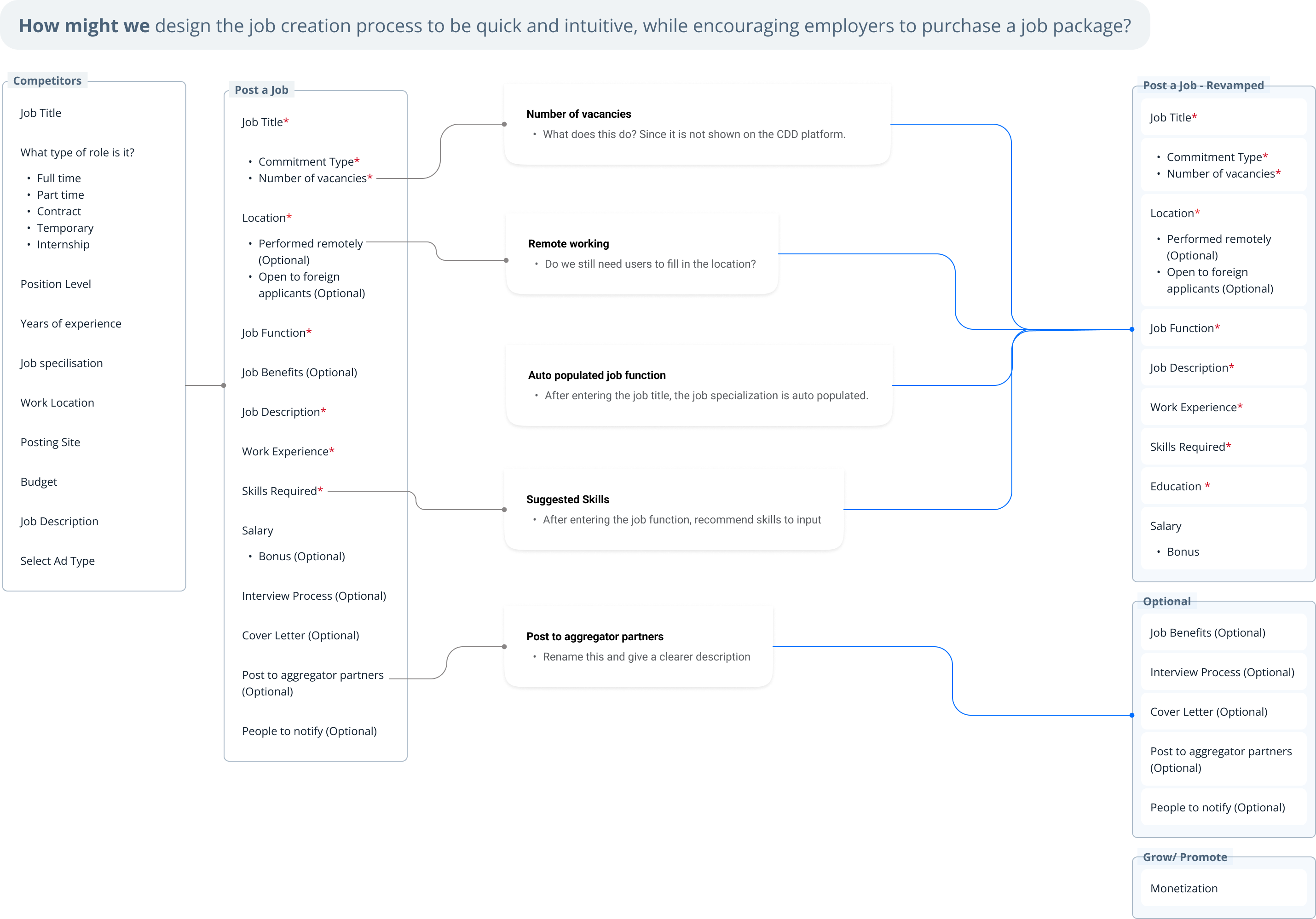
Auto population of cubersome fields
Introduction of monetisation entry points
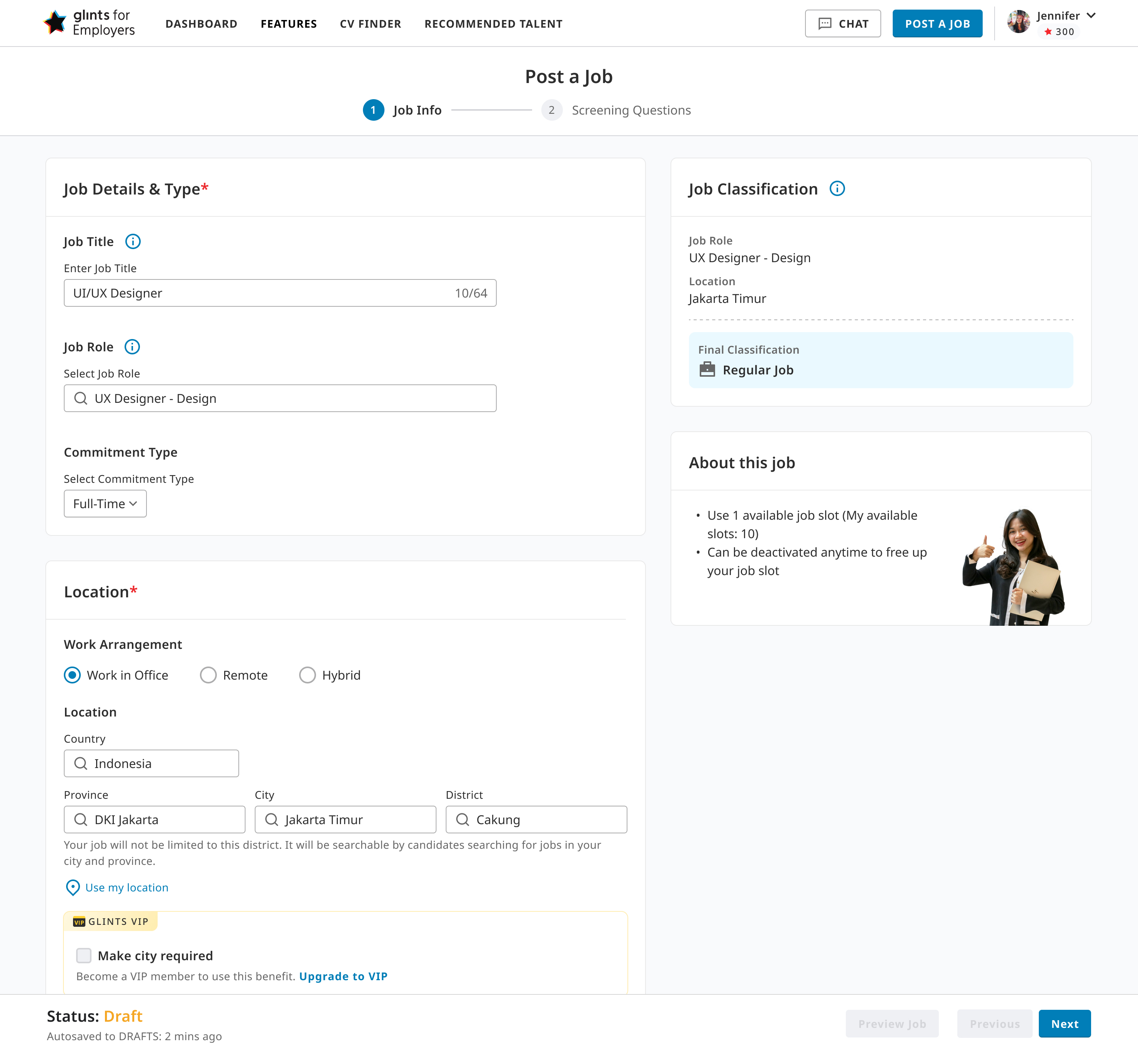
Added robust filtering and sorting functions
Reorganized information architecture
Simplify processes and reduced clicks
Integrate Whatsapp and monetization features
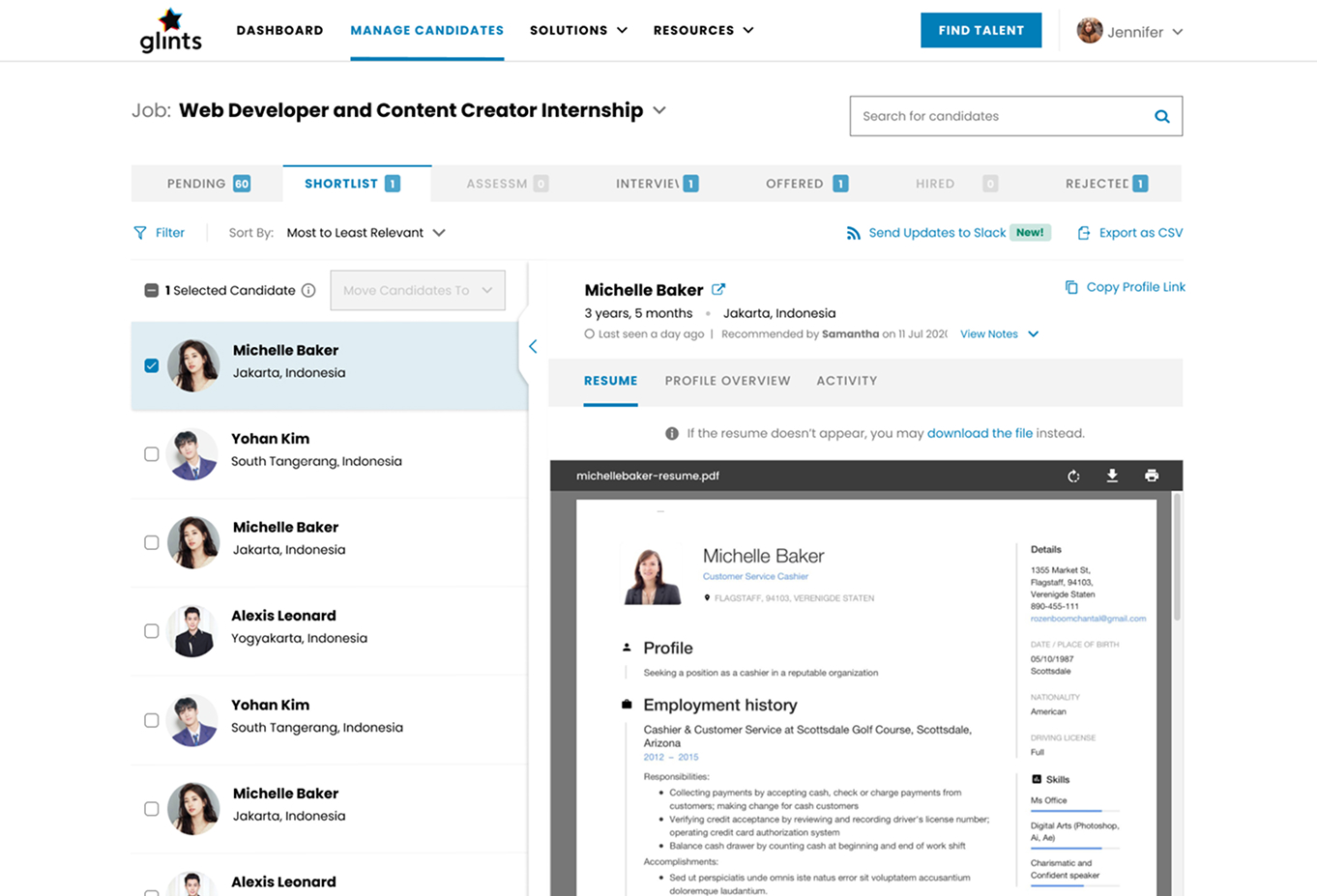
.jpg)
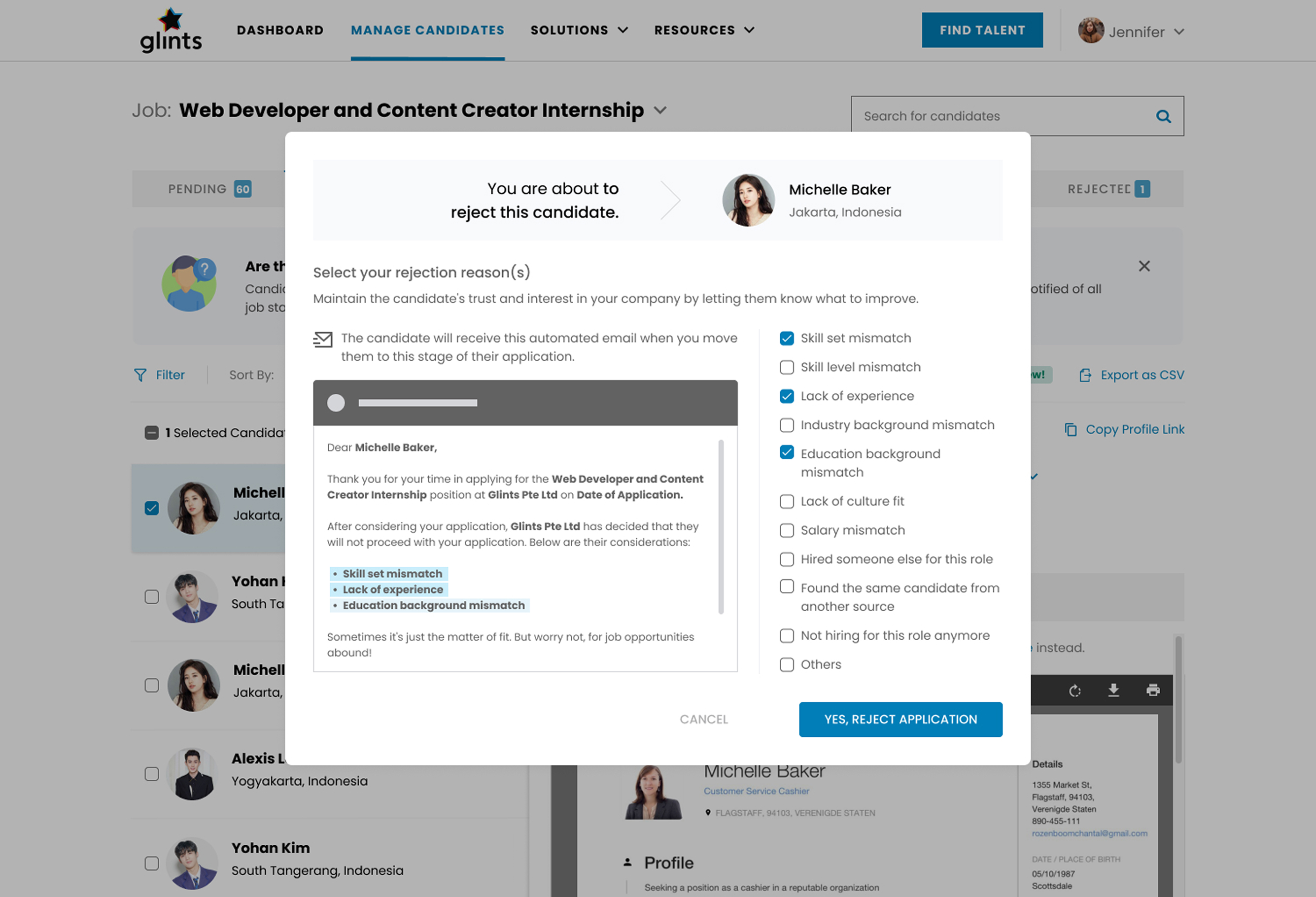
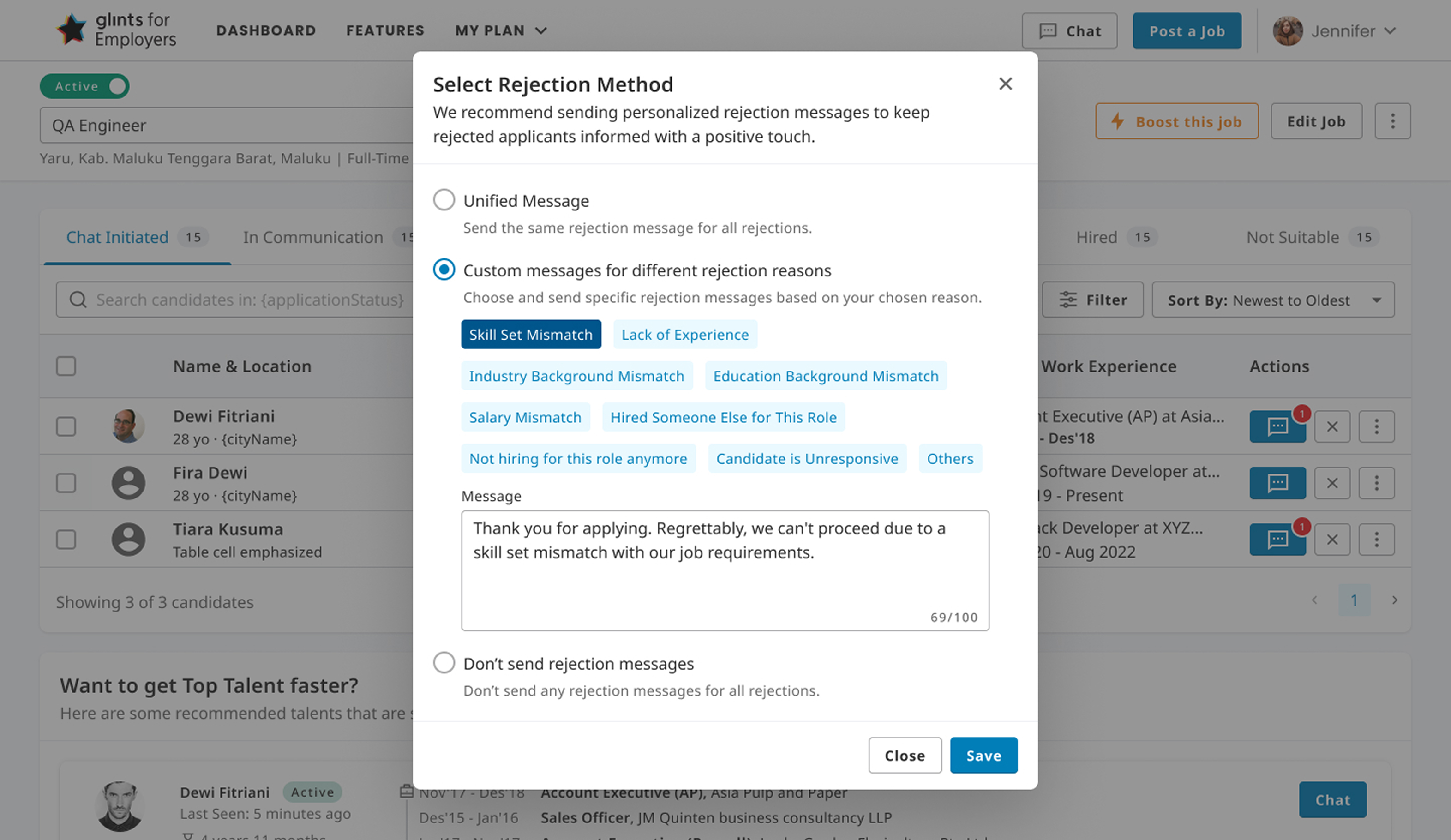
Introduced manual and automated rejections
Reduced number of clicks to reject candidates
Introduced customisable rejection messages
We then prioritized monetizing features and launching new ones to support hiring needs. To drive adoption, I designed intuitive, value-focused interfaces. Applying systems thinking helped ensure cohesive experiences and reduced ripple effects across the platform.
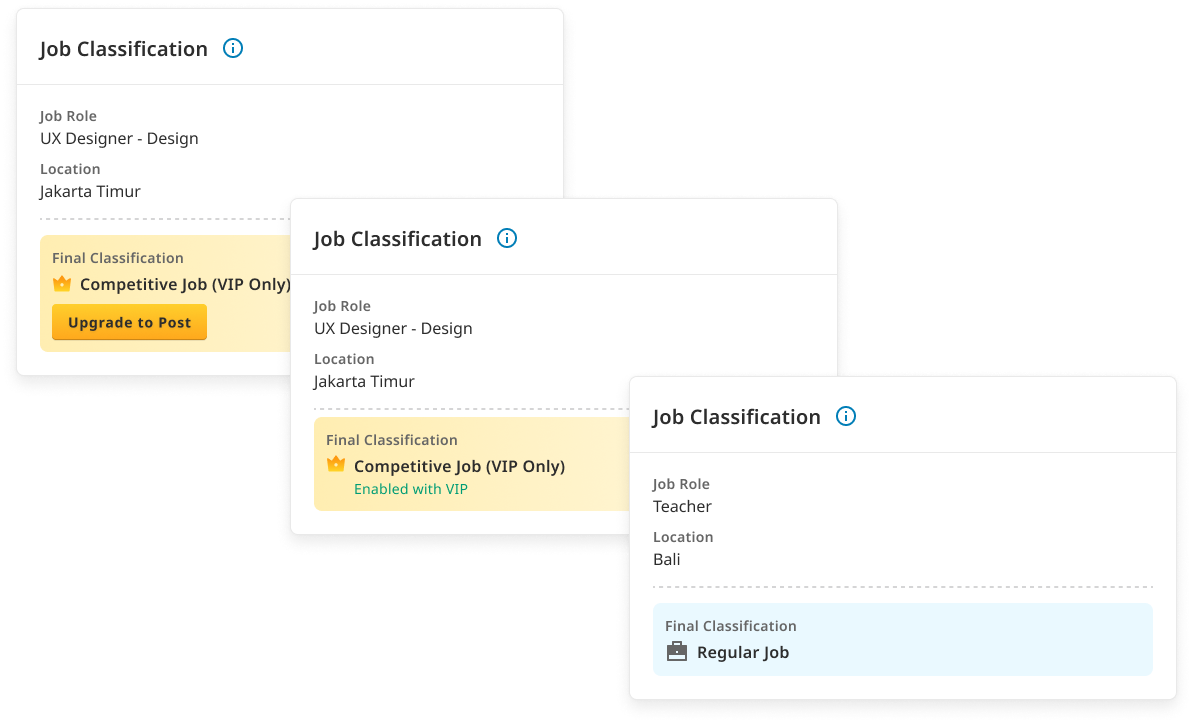
Job posts were classified as regular or competitive based on role and location. Though this added some friction, it effectively boosted feature and membership purchases.
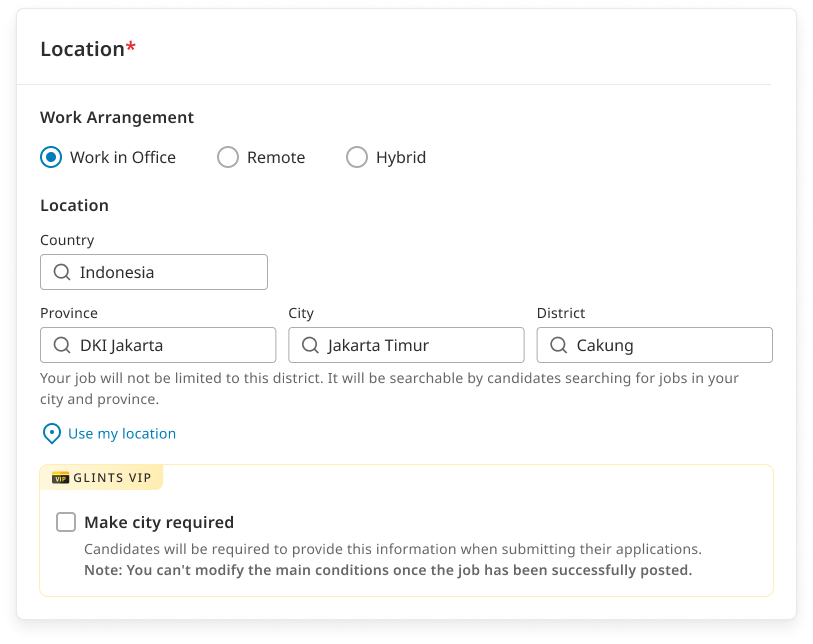
We surfaced key candidate details valued by employers and added the option to make these fields mandatory in job applications.
Employers can add various preset screening questions, with placeholders automatically populated based on data entered in the previous step. These questions are displayed to candidates when they apply.
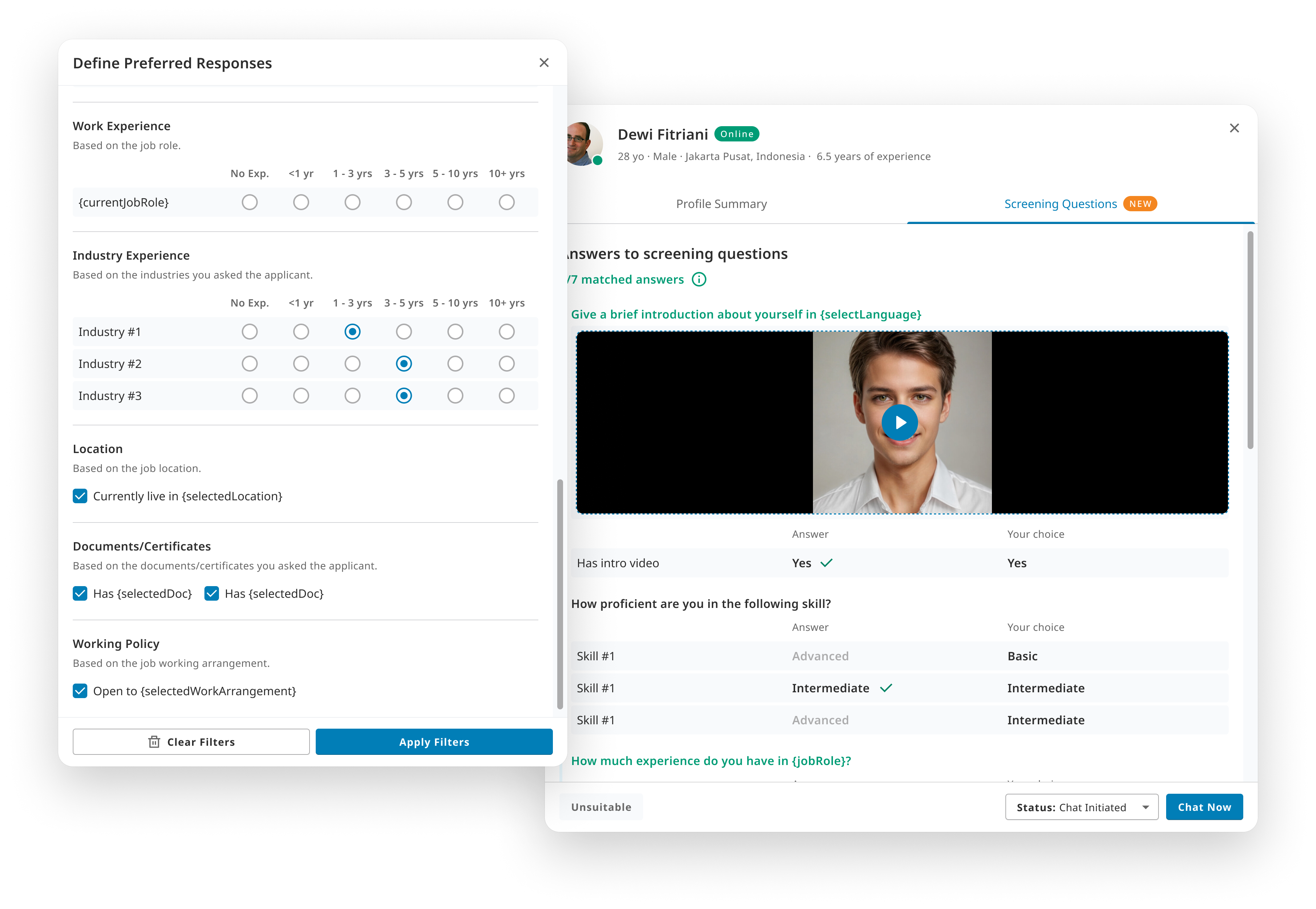
Introduced "Premium Filters" based on customer feedback, highlighting highly demanded filters. Contributing greatly to inbound revenue.
.png)
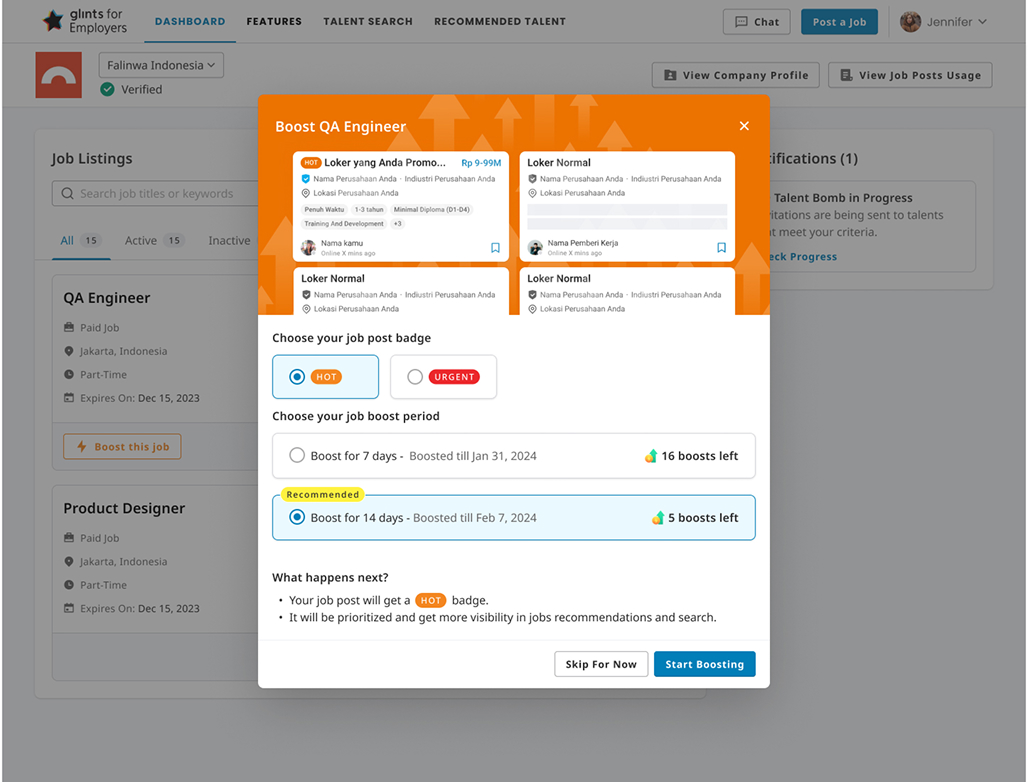
One of our most popular features, Job Boost, allows employers to highlight their job postings with a "Hot" or "Urgent" tag and ensures higher visibility by ranking the jobs higher in the job card feed viewed by job seekers.
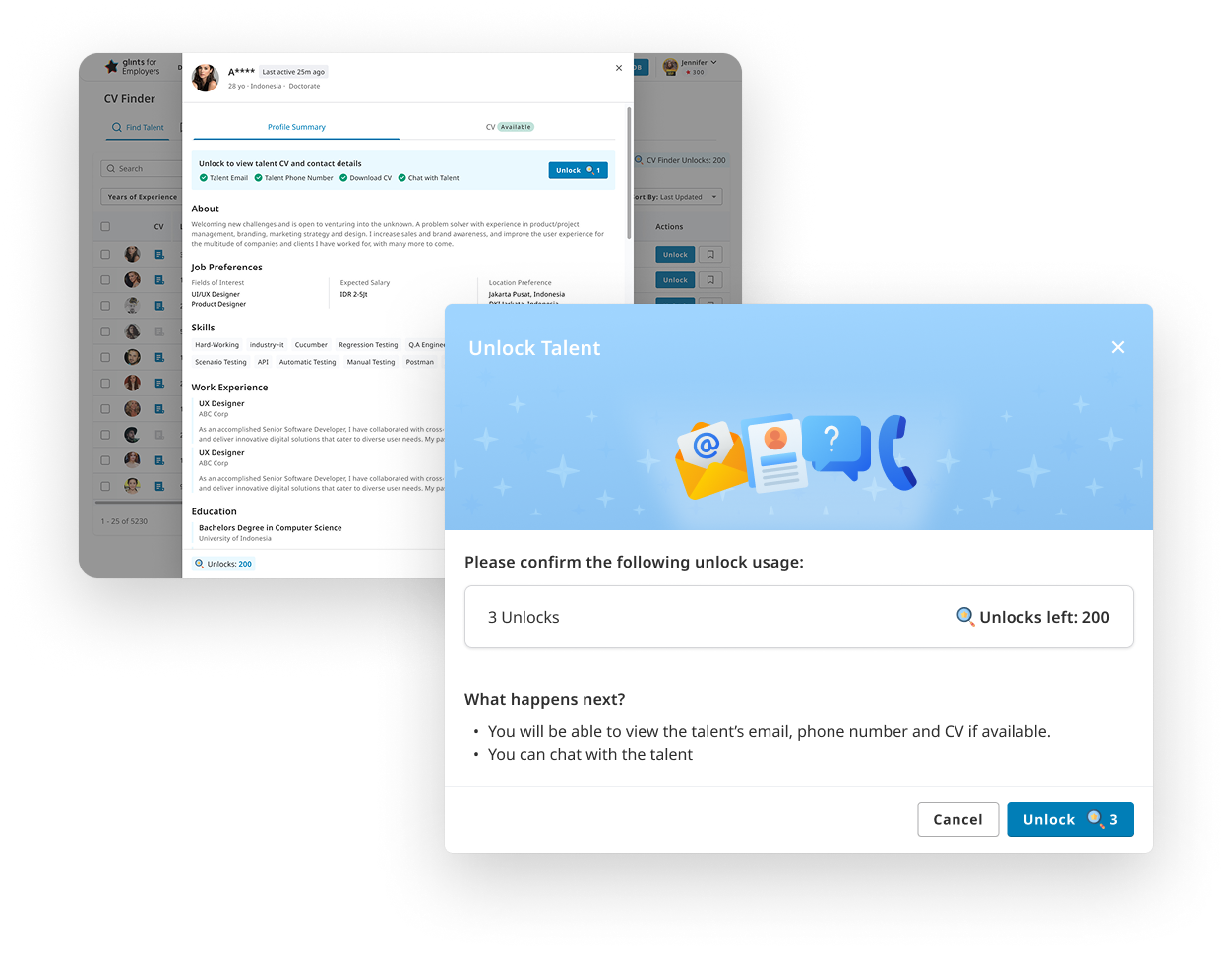
CV Finder enables employers to efficiently search and filter top Indonesian talent, streamlining recruitment
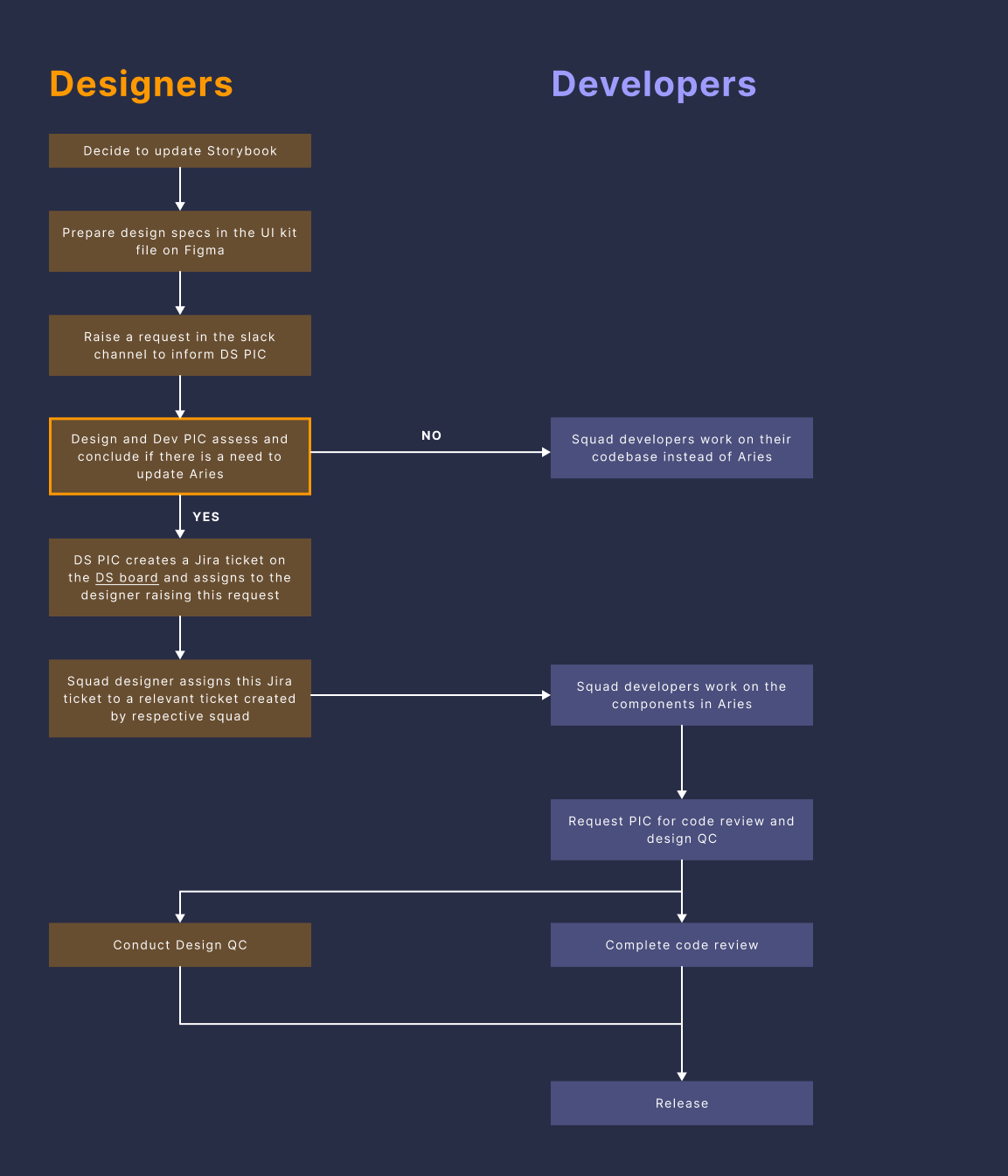
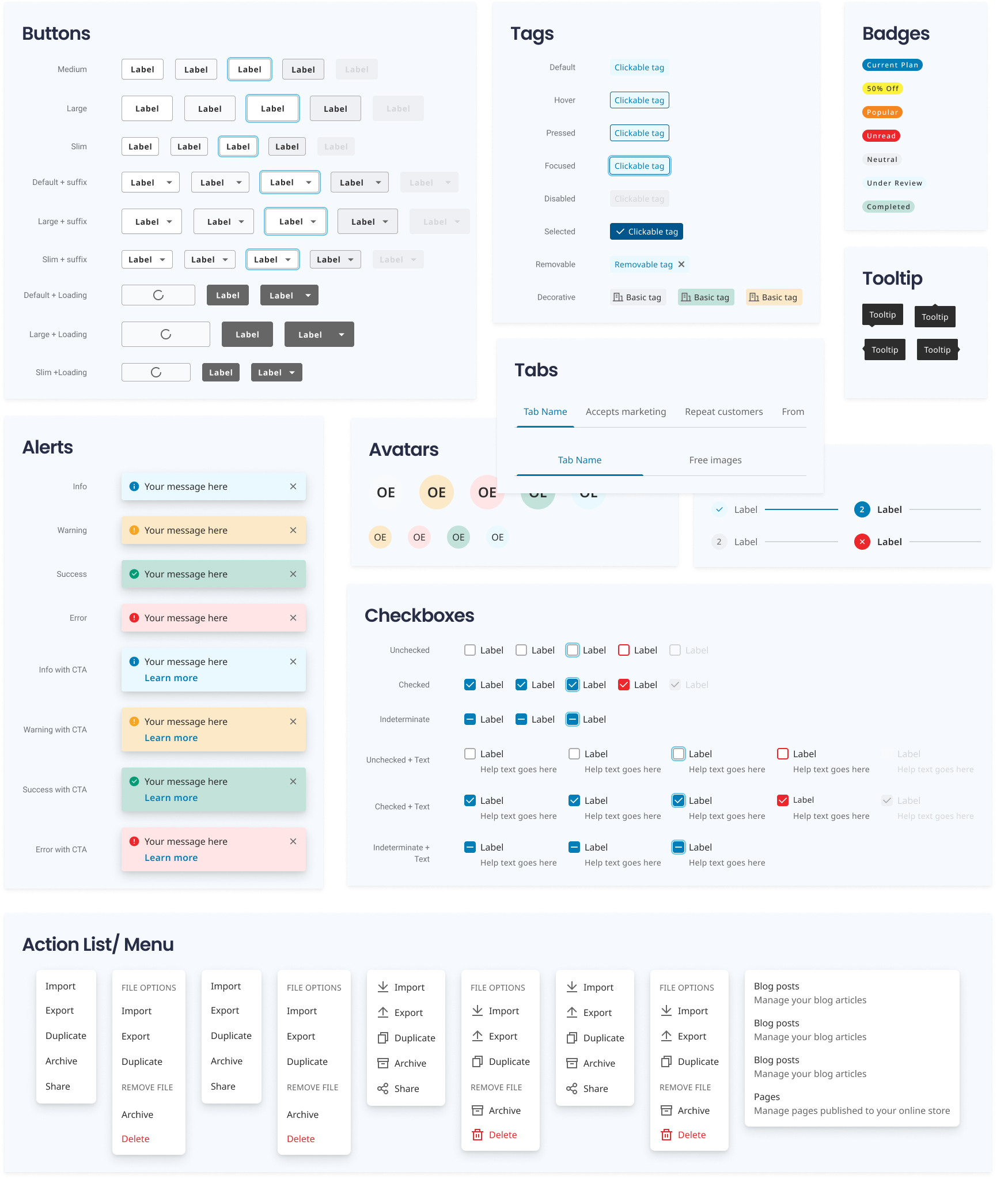
Planned and executed foundations
Sought stakeholder and engineering buy-in
Worked with other designers to set up workflow
Led the brainstorming session
I wish the team could meet in person to build stronger relationships early in the process. There were several cross-functional teams involved in the project, including UX researchers, marketing, and various product teams. I believe that meetings in person help teams move faster and establish trust more quickly
Business Alignment: The design must drive measurable KPIs.
Cross-functional leadership: Balancing user needs, business goals, and technical feasibility was key.
Market Adaptation: Competitive research helped shape our product & UX strategy.
Scaling Design at Speed: A design system was essential for maintaining consistency while rapidly iterating.
When I joined the Employer Squad, the company was focused on accelerating growth, which meant fast-paced delivery often took precedence over deep research. With a lean UX research function and no dedicated researcher, I adjusted by using available data and lightweight testing to guide design decisions.
Working closely with stakeholders, I prioritized clarity and quick validation. While some user-centered ideas required extra advocacy, grounding proposals in evidence helped build alignment and kept the user perspective part of the conversation throughout the whole design and development process.
.svg)